 Noah Karsky
The Virtues of the World (and What Leadership Forgot)
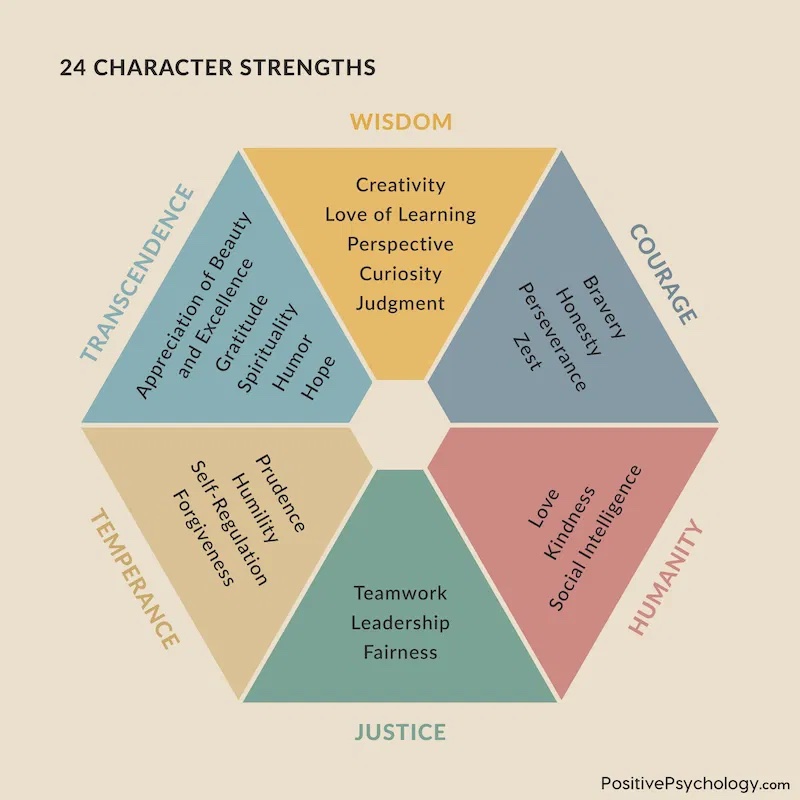
While reading Ways to Go Beyond and Why They Work by Rupert Sheldrake, I came across the concept of these virtues.
- Wisdom and Knowledge
- Courage
- Humanity
- Justice
- Temperance
- Transcendence
These are coined as the universal, cross-cultural, and morally valued strengths identified by Christopher Peterson and Martin Seligman. Sheldrake argues that much of what we engage with today pushes us away from these virtues and toward their opposites. This erosion is evident across media and public discourse, and conspicuously absent from our national leadership.
I don’t think it is fair to blame individual persons for why these are missing in culture; rather, I blame the recent years in which our society reworked itself to reward bad habits and behaviors. Amongst these virtues, my favorite is transcendence, which on the surface sounds very loaded and spiritual almost in a non-tangible unattainable sort of way. When I hear the word transcendence, I picture either a bald, meditating monk or a doomsday Christian nationalist. However, I think it is our key to getting this train back on the tracks. Before discussing how to repair this, we should examine the depth of the current decline.
First, on the topic of temperance, in an age where many have more than their basic needs met, we still crave excess and greater power. We have people on social media with massive followings pushing narratives of being the alpha and their followers rewarded them for it. When it comes to the epitome of leadership in America, many voters appear to reward performative dominance as a leadership trait. The issue is obviously multi-faceted, but some underlying drivers may include a lack of self-accountability, a reluctance to think independently, and a diminishing sense of personal agency.
Exploring additional ways I see lack of virtue, we are being led by an administration that strikes down opponents by gutting oversight committees and eroding mechanisms of accountability. So much for justice. I know the US had many issues of its own to get through, but I once believed we aspired to be a country capable of offering principled leadership to the world. Instead, we viewed some of these important programs as woke and wasteful. The US recently withdrew from over 60 international organizations and treaties, some probably dumb, but many working together to tackle societal issues at large. So much for humanity and carrying the torch of caring for Earth and for future generations.
Folks like Kash Patel, Kristi Noem, and Pam Bondi go in front of oversight committees, and one might expect them to have an ability to answer for what they campaigned for. A call for transparency, making America safe, and showing that we are prioritizing the needs of our most vulnerable citizens. Instead, we see them refuse to engage with the evidence laid out before them. There is no wisdom here, and they appear willing to ignore evidence and public concern; furthermore, those who are supposed to hold them accountable have NOTHING to show for it so far. Where is the courage to stand up to the bullies of today who are bleeding America of the core values it once stood for. I feel a deep sense of civic disappointment at what we are permitting to unfold.
I hope that others are asking themselves, why. Why is all this happening. Why are people complacent with leaders whose main focus is: how can I further solidify my power and what ways can I enhance my self-enrichment and the interests of elites. I read it as the system being built by the elite and powerful is working. Most folks do not get the privilege of stepping back and looking at the workings of it all. They are too focused on putting food on the table, too busy distracting themselves from mental health issues, and too mentally exhausted to step back and ask what kind of character we are collectively cultivating. No single individual is likely to redirect society alone, but if we can collectively, incrementally work to live a life filled with the key traits of transcendence I trust that we will begin to change the tide of things. It is through simple daily decisions to embody these values, we will begin to value better virtues in our peers and leaders. I believe it is through cooprative commmunities that we can begin change the “societal norm” and open more opportunity for those in power to feel shame for going against these virtues. By raising our collective consciousness, we plant the conditions for outcomes that benefit humanity rather than merely ourselves.
Get new posts by email
One message per post. Nothing else.
No tracking, no selling, no other mail. Unsubscribe link in every message.